School Empowerment Network · Annual Report
202526
Creating schools where every student is treasured, challenged, and inspired.
SEN at TenA decade of developing the leaders schools need.

This report closes SEN’s first decade. We began in 2015 in Detroit’s lowest-performing schools, betting that the leaders those schools needed could be grown from within. Ten years on, that hypothesis has been confirmed across multiple locations. When high-capacity leaders are coached to build and revise the systems their own schools need, three things follow. Student outcomes improve: this year the Dever Elementary School in Boston left the state’s bottom 10% for the first time since 2018, and in Texas every school from our first School Design cohort, launched in 2019-20, is now rated A or B by the state. Talent stays: of the twenty-four Detroit educators we traced from our founding cohorts, nineteen are still in education, as principals, district leaders, and developers of other leaders. And pipelines take root: in Springfield, a teacher we coached became a principal this year, after nineteen years in the classroom, through a pathway we built with her district.
As you read the report, you will see examples of SEN’s approach producing results from Texas to Massachusetts, and on the gold cards you will meet leaders from our founding cohorts, ten years on. Our purpose for the next decade is the one we started with: develop strong leaders, align systems for impact, and create schools where every student is treasured, challenged, and inspired.
This year also marks the opening of Arcadia High School, a new school model, created and incubated at SEN and now standing on its own as a sister organization in Houston, Texas. Arcadia is a reimagining of the teaching profession that builds substantial development time into the school day through tiered teaching teams and an innovative student schedule. At Arcadia, teacher development is built into the structure of the school, students learn in small groups with caring adults, and technology is a tool rather than a replacement for relationships with inspiring teachers and mentors. The first campus opened in Houston this August, and we are excited to support a school that was built from the start to meet the challenges facing public education today. It is a fitting way to close our first decade, because the ideas we developed alongside school leaders over ten years now have a home of their own. Thank you to the partners and funders who have trusted us with this work, and to the educators who do the work every day. We look forward to the next ten years with you.
Alex Shub
Chief Executive Officer
Five spotlights from our Texas team.
If we provide best-in-class professional development to early childhood educators aligned to the Science of Early Learning...
Then we will see more effective early childhood classrooms, stronger kindergarten readiness, and greater retention of the early childhood workforce.
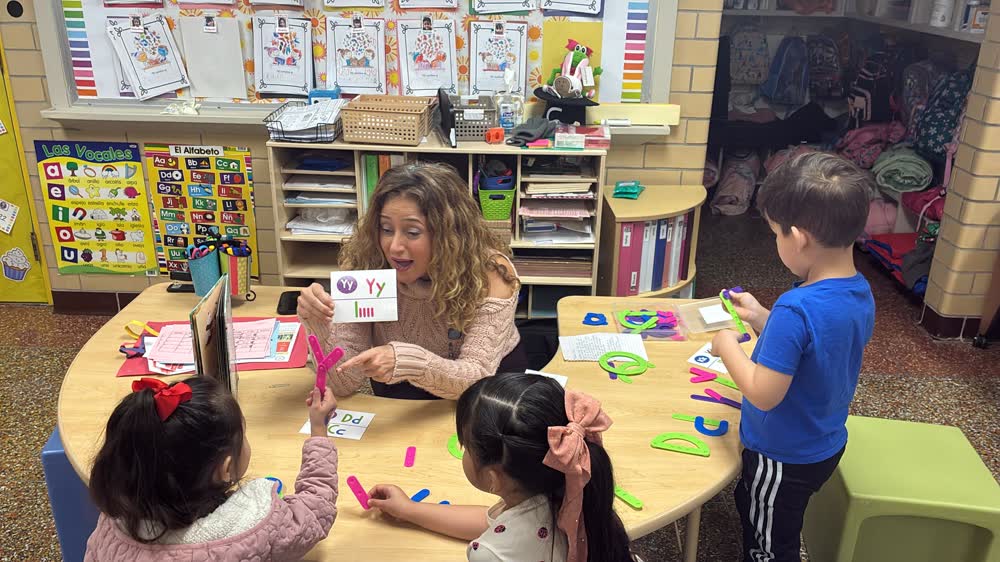
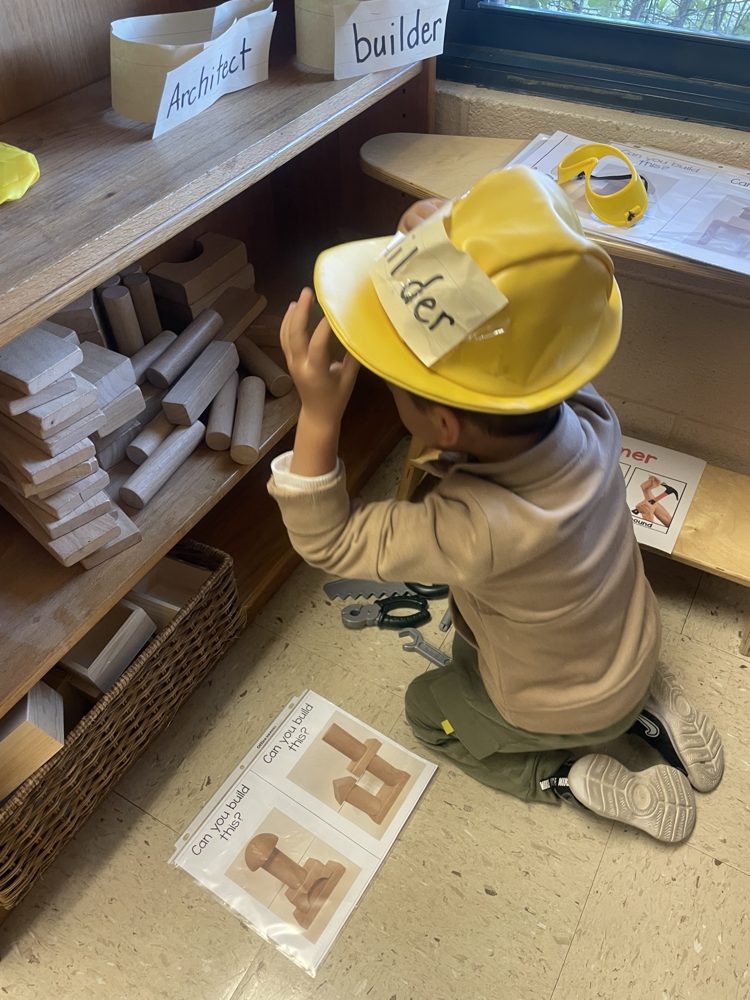
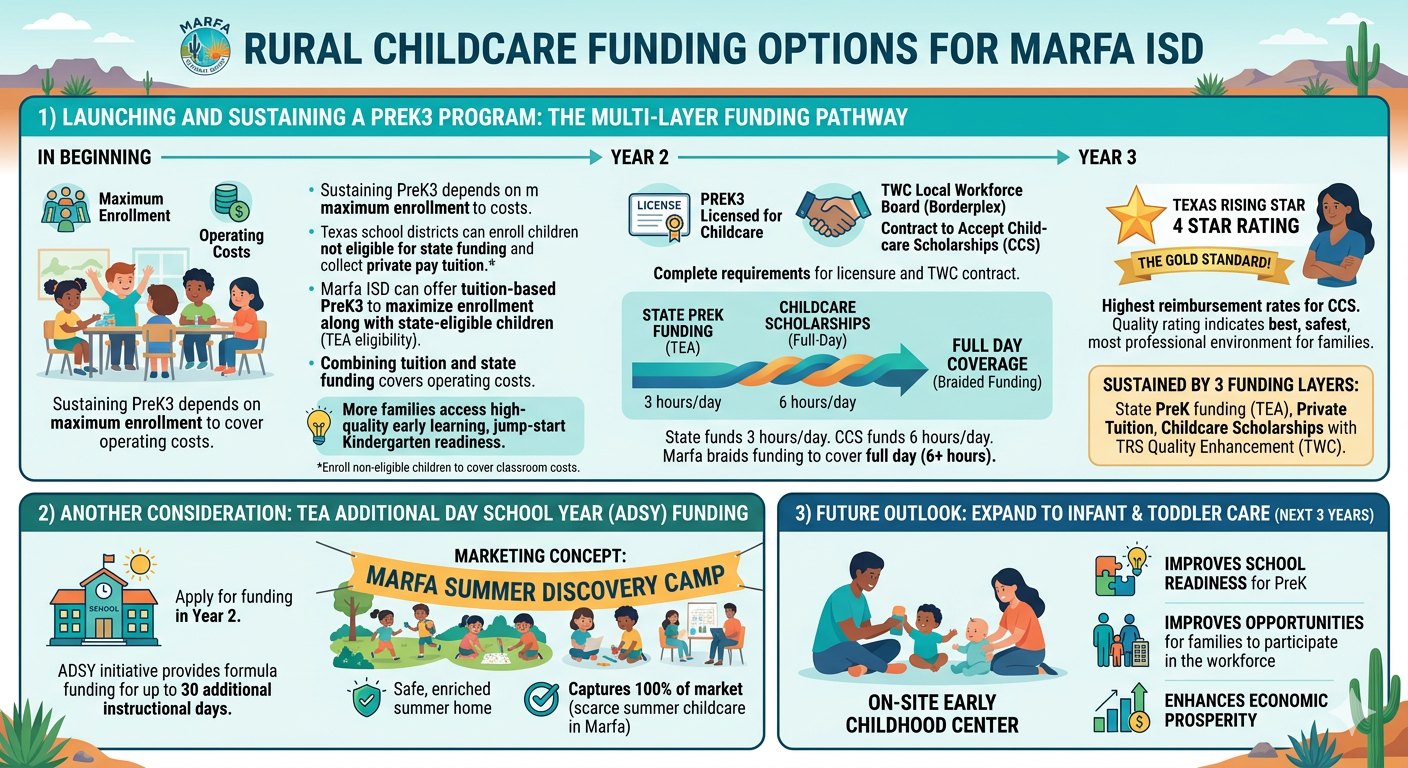
Thanks to the Moody Foundation, SEN’s early childhood work is expanding into rural communities. Beyond our school quality work, our new Braided Funding team supports rural districts to pool multiple funding streams to expand early childhood options and access for children from birth to age four in their community.
In 2025-26 we partnered with City Education Partners to design a regional solution to a critical challenge: great schools that were destabilized the moment a strong principal left.
The San Antonio Aspiring Leaders program weaves together LEA-level talent strategy work with direct leadership development of ready next leaders to deliver a bench of future leaders for San Antonio schools.
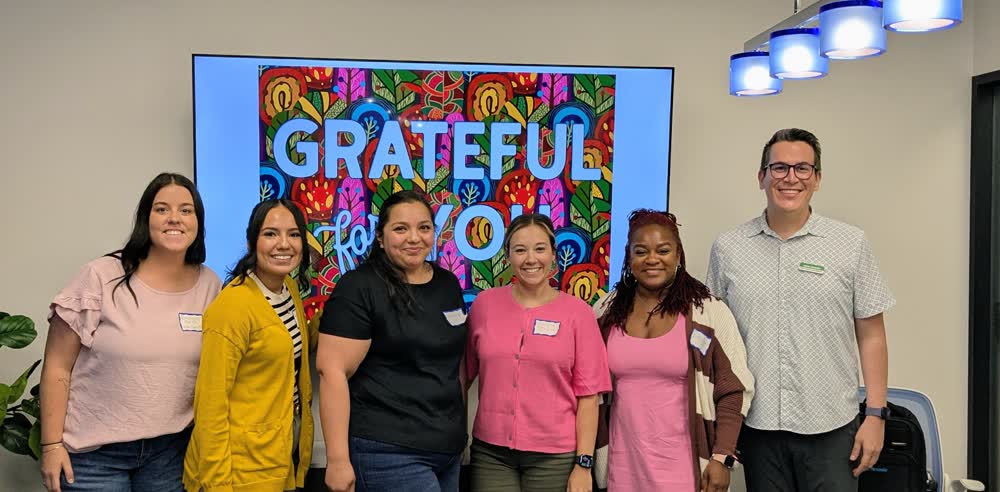
In order to build a deep talent “bench,” our program needs to not only directly develop high-potential leaders but also scaffold district- and school-level efforts to identify top talent, project future demands for leadership, and create thoughtful plans to ensure that high-potential educators receive the support they need to be ready when the need arises. Our day-long Talent Review is the precursor to nominating future Aspiring Leaders and creates an exciting, collaborative space for participating LEAs to think strategically about their talent efforts.
When Clarissa Gutierrez was nominated for the Aspiring Leaders program, she was already on a leadership track. “The program helped me move from simply wanting to become a leader to actually truly feeling like a leader,” she says. The shift she describes is precise: “Instead of asking, what do I need to do to fix this, I started asking myself, how do I build other people and systems around me so that we can solve this together?”
Her advice to communities trying to build a stronger leadership bench: “Don’t wait for someone to have the title before you develop them. Identify potential early. Give people authentic opportunities to lead, and coach them along the way.”

When we met Nick Wasmer, he was a science teacher at Southeastern High School, just a few years into education after starting out in an entirely different line of work. He joined our founding Aspiring Leaders Institute cohort in 2015-16 and led Southeastern’s ninth-grade small learning community the following year. Today he is Supervisor of Leadership and Continuous Improvement at Oakland Schools, where he develops school leaders across all 28 districts of Oakland County. A leader we developed now develops leaders for a living.
“My own growth as a leader was significantly accelerated through my work with the School Empowerment Network. Their team helped me define and measure clear success criteria for my schools. Through continuous improvement, we co-developed systems to align our instructional practices, anchor our culture in shared values, and support staff-wide professional development. Ultimately, SEN strengthened my capacity to cultivate growth in my staff, empowering us to collaboratively drive the progress we wanted to see in our students.”
The largest school district in Texas’s Big Country region has an enormous goal: prepare every student to thrive in a community whose future is already taking shape. Abilene is now home to one of the world’s largest investments in artificial intelligence infrastructure, and for Abilene ISD the opportunity is clear: students should be able to see themselves in the innovation happening around them and develop the knowledge, skills, and confidence to help shape what comes next.
SEN partnered with Mann STEAM Academy to turn an ambitious school model into strong, consistent experiences for students. SEN coaches worked shoulder-to-shoulder with campus leaders as they observed instruction, developed teachers, and translated professional learning into daily practice. Mann’s leaders and teachers broke a long cycle of underperformance.
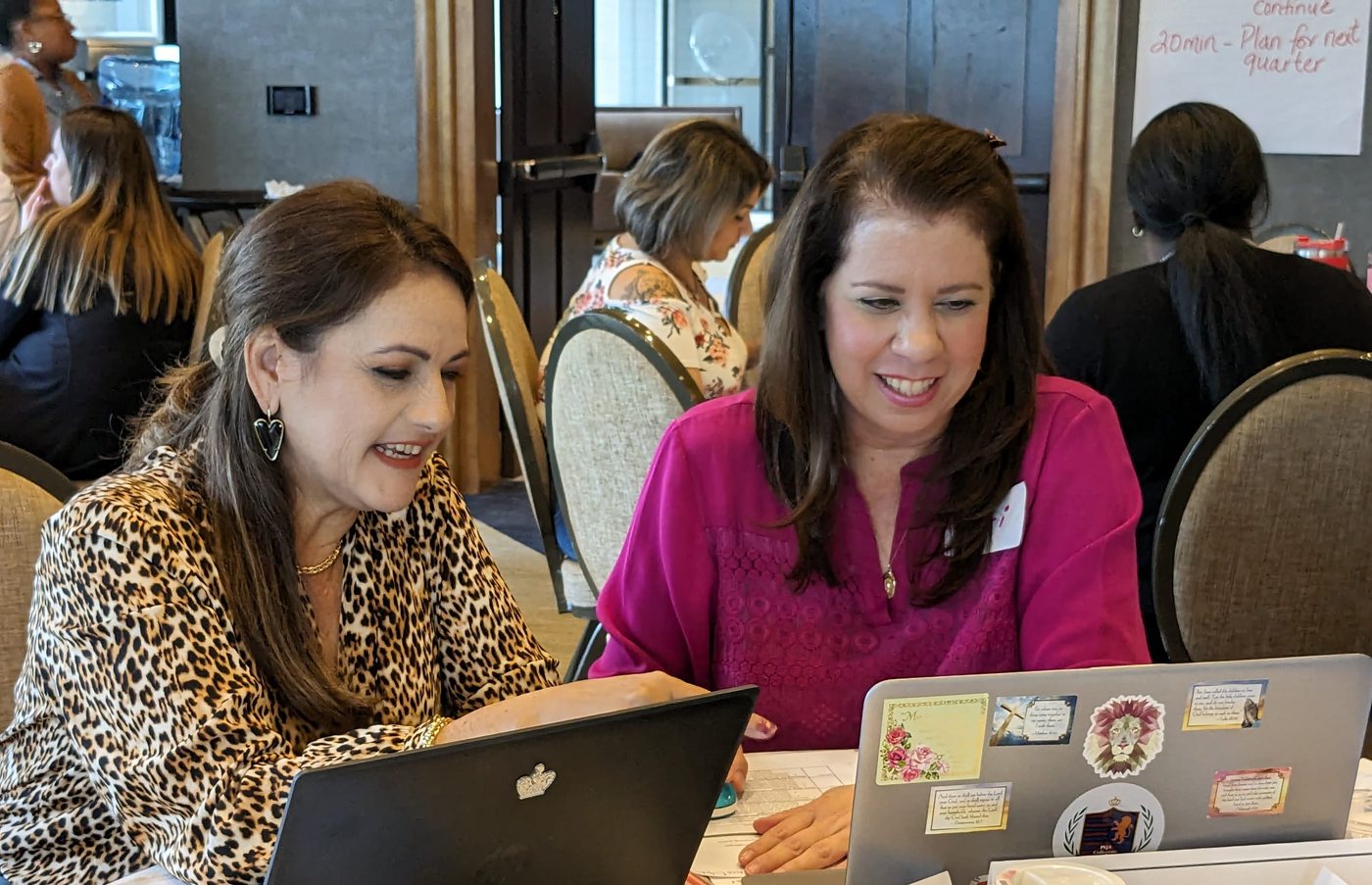
In 2025-26, Bowie and Purcell elementary schools entered SEN’s yearlong School Design Fellowship to become the region’s first dedicated K-5 STEM academies, with school models rooted in the aspirations and needs of their own communities and centered on engineering and real-world problem-solving. Both earned approval from the Texas Education Agency and were awarded continuation grants to launch their STEM models in 2026-27.
In our School Design Fellowship, we support schools and LEAs to design or reimagine schools with high-demand models including College and Career Prep, STEM, and Early Childhood. Since fall 2019 we have supported the design and launch of 60 schools across Texas. Here are three standouts from our sixth cohort, and a look at where our first cohort stands six years on.

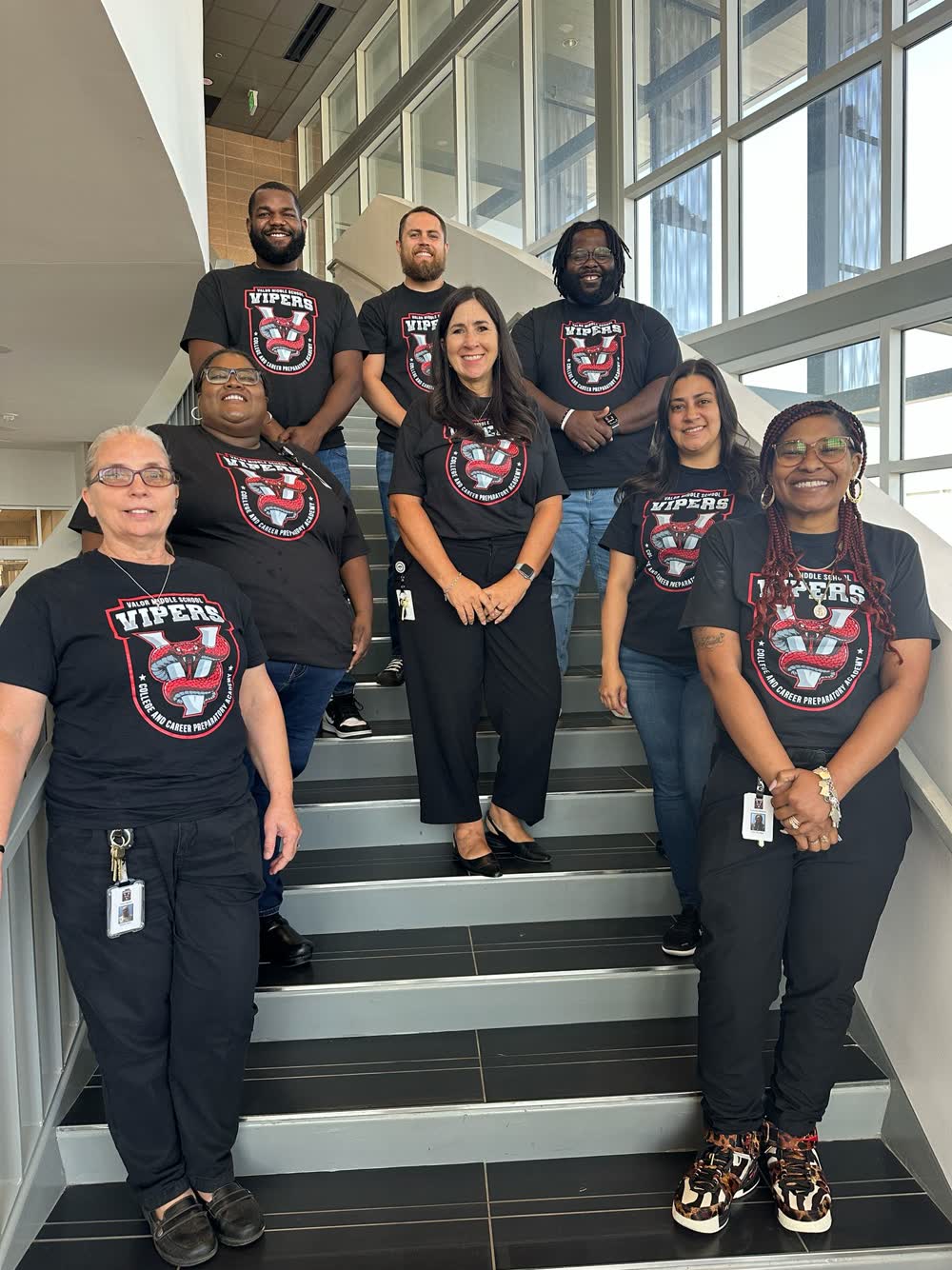
Launch strategyEast Central, a fast-growing district in Bexar County, opened Valor MS in a new building funded through a recent community bond.

Launch strategyTexarkana ISD consolidated two historically struggling schools in aging facilities into the new Parks Elementary building.

Launch strategyEctor County ISD closed an underperforming elementary school and used the building to open BEEC, giving families that previously had to commute across town a local PK3-PK4 option.
In our first cycle, we partnered with four school leaders who had big ideas and just needed some fuel to make them happen: Wester, McCool, Hall, and P-TECH at Victoria East High School.




Today Wester, McCool, and Hall are all A-rated schools, and Victoria East is rated B. That’s what visionary leaders can do when the right investment and the right support show up together.
Special education challenges rarely have a single cause. Concerns about staffing, compliance, service delivery, or student outcomes often connect to deeper questions about how an organization defines responsibilities, makes decisions, and supports educators. This was true for our partner, Aspire Public Schools’ Bay Area region, a network of six schools where special education roles, practices, and support systems had developed differently campus by campus. Through school visits, document reviews, stakeholder interviews, listening sessions, and advisory committees, we supported the Aspire team to identify and address a foundational need: a shared Special Education Operating Model rooted in shared beliefs and principles. The work continues in 2026-27, as we collaborate with the Aspire team to make the Operating Model a reality.

Nikhita Navani was a lead English teacher in the Education Achievement Authority when she joined our founding cohort in 2015-16. The next year she re-opened a middle school as a small learning community, and it posted the second-highest School Quality Review growth among the network’s fifteen schools while cutting suspensions by 73 percent.
In 2017 she left Detroit to learn from high-performing schools, as an assistant principal in Brooklyn and then a principal in Milwaukee, and in 2022 she came home. Today she is Senior Managing Director of Educator Fellowships at Teach For America Detroit, where she develops sitting school leaders in 19 districts across Michigan and runs a summer school that her fellows lead while training new teachers.
“My early exposure to building strong systems and to using data to inform decisions came through that coaching. It was reinforced everywhere else I went, and it is something we focus on pretty heavily now in the fellowship. What we do is really about how you remain in the school communities and the cities that you love and still get the development you desire to become a strong instructional leader. It is a deep investment in the leaders who are already doing the work in schools, so they can stay in the communities they care about.”
What 48 surveyed school leaders in Massachusetts and Texas told us this year.
“The [SQR] report directly led to our hiring an academic interventionist and a family engagement specialist to focus on homelessness and newcomers.”
“This has been an invaluable experience. The SQR shapes our goals for the coming year. I have frequently referenced the reports we’ve received.”
“As a fairly new administrator, I credit the SQR process greatly for contributing to the development of my leadership skills, awareness, and support.”
“Having the same reviewer for 4 years running has been invaluable to me as a leader.”
“Having served on many NEASC [New England’s school accreditation body] visits, I am very impressed with the process and the detailed feedback from such a short visit.”
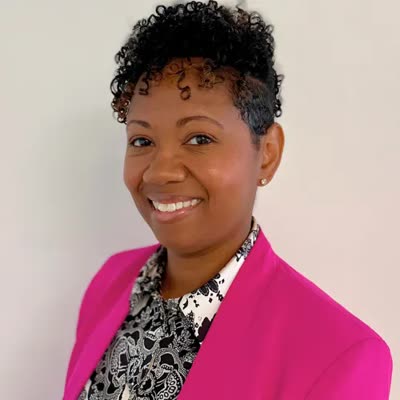
Kyra White taught English at Willow Run and Jalen Rose Leadership Academy before becoming an instructional coach in the Education Achievement Authority and joining the founding cohort in 2015-16. Her coaching log from those years shows her leading her own teachers, running PLCs, and redesigning the school’s advisory program. Today she is School Director at University Prep Schools in Detroit: seven years and counting leading the same school. A decade later, she is still educating Detroit’s kids.
“All of our kids deserve excellent leadership. Unless somebody is constantly pouring into that [leader], they can be doing the work and not growing. A lot of times, we equate time with wisdom or skill, and that’s not always necessarily the truth. Having that regular, focused support to help move a particular goal from here to there is invaluable. When I started with SEN, that was the beginning of my journey, and that year was a pretty rough year. I keep thinking, what if I didn’t have a coach coming in to help me in the way that [SEN] was? What if I didn’t have somebody to pick up the phone and call?”
Results from our Northeast partnerships, on the state’s 2026 accountability and MCAS results, with one story of what they look like from inside a school.
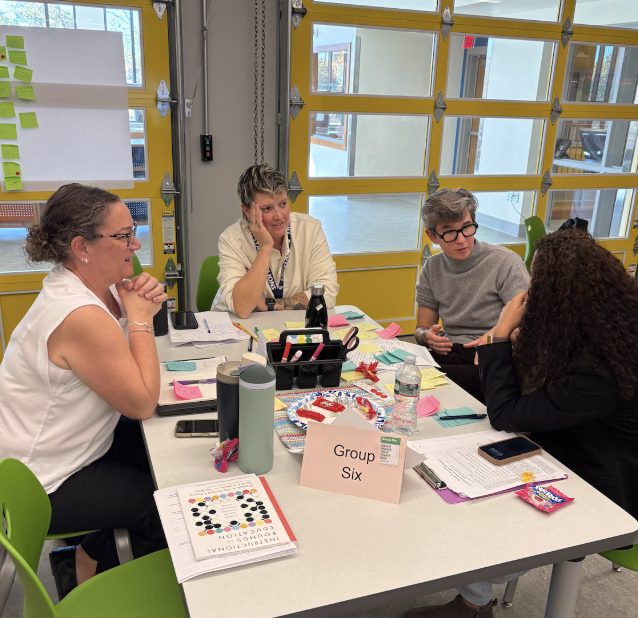
In partnership with SEZP, SEN launched Equitable Pathways to Leadership (EPL) to strengthen instructional leadership from within schools. Combining weekly individual coaching with team-based support for schoolwide improvement, EPL develops leaders’ skills through structured, job-embedded practice.
Rising to the challenge. Forest Park Middle School absorbed a closing school, grew by nearly 60%, and still made “substantial progress” on state accountability measures, its best result since the current accountability system began in 2018.
“At first I didn’t think I could be a leader. I’ve always been a classroom teacher, for 19 years. But the potential [my coach] saw in me, and through coaching, I was able to move from being an assistant principal to an associate principal in only three years.”
Mrs. Lewis entered EPL as a strong math teacher of nineteen years with no plans to lead. With SEN coaching she deepened her own instructional practice, took on department and systems leadership, and moved from assistant principal to associate principal, where she led her staff in using data to respond to student work. This year she became Principal of the High School of Commerce, Commerce Campus.
“Mrs. Lewis is an incredible educator who is the heart, soul, and instructional guru of the High School of Commerce… I am so excited that she [is] the Principal of the High School of Commerce [this] year.”
SEN’s work in Southbridge began in 2018-19 with culture coaching, and over the years grew to include instructional leadership coaching at the district’s elementary schools and, in 2024-25, support for district leaders. Since summer 2025 we have coached the superintendent and his cabinet on district strategy, the structure of the central office, and the systems that carry priorities into schools, alongside instructional materials work at Southbridge High School. In 2026-27 the partnership adds support for the district’s special education team.
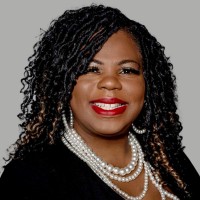
Tanisha Manningham spent nineteen years at Denby High School as a special education teacher, assistant principal and, from 2015, principal. She had not planned to run a school until a leadership program saw a turnaround leader in her in 2014, and SEN’s coaching carried that preparation into the job.
In a community with more than its share of challenges, she set out to make Denby a beacon of hope, a safe place to learn. She led the school for nine years, through its 2017 return from the Education Achievement Authority to the Detroit district, and calls the principalship the most rewarding and most challenging thing she has ever done. In 2024 she moved to central office as Senior Director of School Operations for thirty DPSCD schools.
“What was helpful was the ongoing training. It wasn’t, we’re going to train you and then leave you to the wolves. It was, we’re going to keep supporting you, guiding you, pushing your thinking, praising you where you’re doing well and challenging you where you can improve. Empowerment is my favorite word, because somebody empowered me. I’m 27 years into education, and I am so proud of my Manningham tree: principals, assistant principals, deans of culture, people who have moved up to central office. They sprouted because I pride myself on seeing a skill set in someone and bringing it out, so they see their own leadership potential.”
A model we built, now standing on its own.
Created and incubated at School Empowerment Network over many years, Arcadia is a new Texas charter school that reimagines instruction: teams of six educators and sixty students per learning space, daily collaborative planning, an internal teacher pipeline that recruits new teachers from student communities and develops them on the job, and strategic use of AI that blends proven instructional practices with future-facing skills.
Arcadia now stands on its own as a sister organization, carrying a decade of our thinking and learning about teaching teams, teacher pipelines, and school design into a building full of students. We see its first campus as a proof point: the school that shows what the model can do, refines it, and helps it grow in the decade ahead.
School principals, district central-office and county leaders, an interim superintendent, and four whose full-time work is now developing other school leaders. The investment did more than produce leaders; it produced people who now develop leaders of their own.
“This development is best supported through job-embedded learning and coaching: a continuous cycle of learning, practical application, and feedback that fosters enduring growth.”
The belief we started with has held up: when leaders are developed well, they go on to develop others, and the results keep compounding a decade later.
Write to us at sen@schoolempowermentnetwork.org, or start with the four areas of our work: